
Despite a record-breaking comeback year, the septet walks away from the Grammy race to take a powerful stand against artistic segregation.
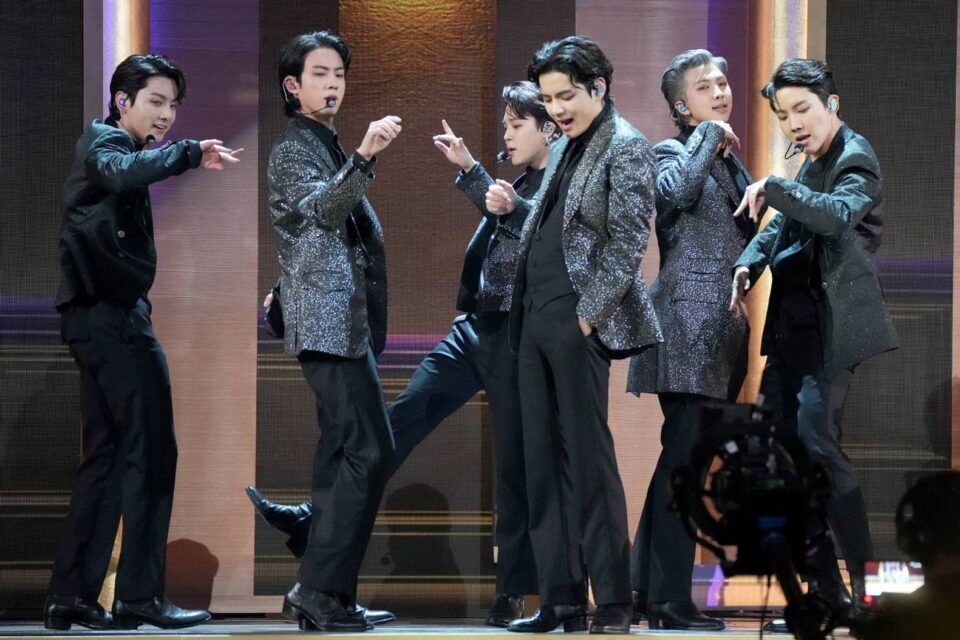
BTS perform onstage during the 64th Annual GRAMMY Awards. Kevin Mazur/Getty Images for The Recording Academy
BTS has officially announced they will not submit their megahit album Arirang for consideration at the upcoming 69th Grammy Awards. All seven members of the supergroup — RM, Jin, Suga, J-Hope, Jimin, V, and Jungkook — took to their individual social media accounts to announce they will not participate in the awards’ nomination race, explaining that their choice is rooted in the fundamental belief that music is beyond geographical and linguistic borders rather than being compartmentalized into restrictive sub-genres.
This standoff follows the Recording Academy’s decision to launch the Best Asian Pop Music Performance category. Unveiled as part of a restructuring plan, the academy pitched the award as a nod to the power of K-pop, J-pop, and C-pop. However, the eligibility rules for the category raised immediate red flags. To qualify, tracks must “meaningfully use” an Asian language, implying exclusion of English-only tracks. Hence, the gesture was quickly interpreted not as an act of inclusion but as a gilded cage meant to keep non-Western artists permanently separated from the major categories.
The timing of the statement makes it all the more important given that BTS would likely dominate the upcoming award cycle. Their fifth studio album, Arirang, scored the biggest first-week for any group album in over a decade, blowing up the international sales charts upon its release. The success of its lead single “Swim“, which debuted at No. 1 on the Billboard Hot 100, showed that their new music belongs at the top of the mainstream music industry. And so, the academy must now deal with the fact that BTS is suppressing their top pop acts by not acknowledging these commercial records, effectively decapitating their biggest competitive draw.
In reference to their decision, the band said they want their music to be felt and appreciated for what it is, not sliced up by region or language. It only highlights that while a Grammy trophy is regarded as solid validation for international acts, for BTS, their art, cultural footprint and their fans, ARMY, are the most important, which gives them the leverage to refuse any system that uses them as a tool for profits or television ratings.
However, the group’s agency, HYBE, has clarified that this is BTS’s personal decision and not an institutional strategy. Nonetheless, the ripple effects will clearly be felt in the music industry. Taking a stand like this, the band has set a precedent that could push major award shows to reconsider how they view global artists. The 69th annual ceremony will still take place on February 7, 2027, but the physical absence of the pop superstars will be deeply felt on stage.