HomeBusinessPsychology says people who press the elevator repeatedly are not necessarily impatient: It is about craving control during tiny moments of uncertainty
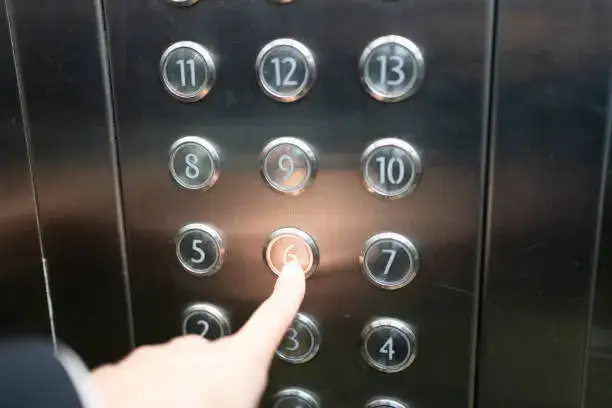
Almost everyone has seen it happen. Someone presses the elevator button once. Nothing happens immediately, so they press it again. Then one more time. Sometimes they repeatedly tap the button several times in a row. Others go even further by pressing both the up and down buttons, hoping one of them will somehow make the elevator arrive faster. Logically, most adults know the extra presses do not change anything. Yet millions of people still do it every day. Psychology suggests this behavior is not simply impatience. It is often the brain’s attempt to regain a sense of control during moments of uncertainty. This tiny habit may reveal something much bigger about how humans cope with waiting, unpredictability, and modern life itself.
Why The Brain Dislikes Waiting More Than We Realize
Humans are not naturally built to enjoy uncertainty. Research has consistently shown that uncertainty activates stress responses because the brain prefers predictable outcomes.
Do you keep pressing elevator buttons?
Waiting for an elevator may seem insignificant, but the brain temporarily enters a state of incomplete information.
Questions immediately arise.
“Where is the elevator?”
“How long will this take?”
“Is it working?”
Without answers, the brain seeks action. Pressing the button becomes an attempt to reduce that uncertainty. Psychologists often refer to this as Intolerance of Uncertainty, a tendency for people to feel uncomfortable when outcomes are unknown. The action itself may not change reality, but it changes how people feel.
The Illusion Of Control Makes People Feel Better
One of the strongest explanations comes from Illusion of Control Theory, developed by psychologist Ellen Langer. The theory suggests humans often overestimate their ability to influence external events.
People frequently perform actions that have no actual impact because taking action feels psychologically rewarding. Pressing an elevator button repeatedly falls perfectly into this category. The brain interprets action as progress. Doing something, even if ineffective, often feels better than doing nothing.
This same pattern appears in many areas of life. People refresh email inboxes waiting for a response, repeatedly check package tracking updates, or constantly refresh social media notifications. The action creates a temporary sense of participation.
Why Empty Waiting Feels More Stressful Than Active Waiting
Researchers studying customer behavior have discovered an interesting phenomenon: occupied time feels shorter than unoccupied time. People dislike passive waiting because it gives the brain room to focus on frustration. Pressing the elevator button becomes a small activity that fills that gap.
Imagine standing alone in silence for 20 seconds. It may feel much longer than it actually is. The brain begins seeking ways to make the wait feel productive. The same principle explains why airports place moving walkways in long corridors and why some businesses provide estimated wait times. Humans tolerate waiting better when they feel engaged.
Psychology of people who keep pushing elevator buttons
Why Pressing Both Buttons Happens
Pressing both the up and down buttons often reflects another psychological process called action bias. Action bias describes the tendency to prefer doing something rather than nothing, especially when outcomes are uncertain. The brain incorrectly assumes that more action increases the probability of success. Even educated adults can fall into this pattern.
For example, investors may make unnecessary changes to their portfolios during market fluctuations simply because inactivity feels uncomfortable. Similarly, a person standing in front of an elevator may think, “One of these buttons has to help.” The behavior is not rational. It is emotional.
The Modern World Has Conditioned Us To Expect Instant Results
Psychologists also believe technology has amplified these habits. Today’s adults live in an environment built around immediate rewards. Food arrives within minutes. Movies begin instantly. Messages are delivered immediately. Search engines answer questions in seconds.
Researchers studying Delayed Gratification have found that constant access to instant results reduces patience over time. Even small delays begin to feel abnormal. Waiting 30 seconds for an elevator may suddenly seem inconvenient in a world where most needs are fulfilled instantly. This is particularly noticeable among younger generations who have grown up surrounded by on-demand services.
Why Anxiety Makes The Habit Stronger
People experiencing stress or anxiety may be even more likely to repeat these behaviors. Psychologists often connect this to Compensatory Control Theory. The theory suggests people seek small forms of order and control when life feels unpredictable.
Imagine someone dealing with work pressure, financial uncertainty, or personal stress. Tiny moments throughout the day can become opportunities for the brain to restore a sense of certainty. Repeated button pressing may look insignificant, but psychologically it can function as a micro-behavior that temporarily reduces discomfort.
This is also why some people repeatedly check locked doors, refresh emails, or verify appointments multiple times. The underlying need is often reassurance.
Why Tiny Habits Reveal Bigger Truths
The elevator button is simply one example of a universal psychological tendency. The most important insight is that people are not always trying to speed up the elevator. They are trying to slow down their own discomfort. Perhaps that is why these behaviors are so common.
The brain does not necessarily reward efficiency. It rewards certainty. The next time you find yourself pressing an elevator button more than once, psychology suggests you may not be impatient at all.
Your brain may simply be looking for evidence that you still have some control over an unpredictable world.
FAQs
Why do people press elevator buttons multiple times?
Psychology suggests people are often trying to reduce uncertainty and create a temporary sense of control.
Why do some adults press both the up and down buttons?
This behavior may be linked to action bias, where the brain prefers taking action instead of remaining passive.