






A partner at the acclaimed Mumbai kitchen and craft cocktail bar, Singh explains how Slink & Bardot’s music is curated to complement the rhythm of the room
Ask Vik Singh his favorite memory of an electronic gig in Mumbai, and he doesn’t reach for a lineup or a venue name. “One word — Sunrise. Enough said.”
It tells you all you need to know about the man behind Slink & Bardot, Koliwada Cocktail Club and Banng, someone who has spent two decades in Indian hospitality and believes that if you get the room right, the night will take care of itself.
The kitchen and craft cocktail bar Slink & Bardot, located in Worli, has become one of the city’s most-loved late-night rooms, steered by Singh, who is a partner in the business, and his team.
At one point of the evening, it’s a dining room elegantly designed with candlelight, small plates and innovative infusions, suited for conversation at a normal volume. Stay past 11 pm, though, and you’ll watch tables get folded away and the checkered floor turn into a dancefloor with a DJ console wedged into the crowd rather than raised above it.
Still, Slink & Bardot isn’t necessarily built around a resident DJ or a single sound they want to champion. “We didn’t want the venue’s identity to be tied to a particular genre or a specific DJ,” he says. “Whether it’s house, disco or melodic electronic, the venue should be remembered for the energy it creates, not simply for who’s playing that night.” He points to clubs like Fabric, Space, Pacha and Manumission as reference points — and how people remember the atmosphere in those rooms. “Down the line, it’s the club people remember,” he says.


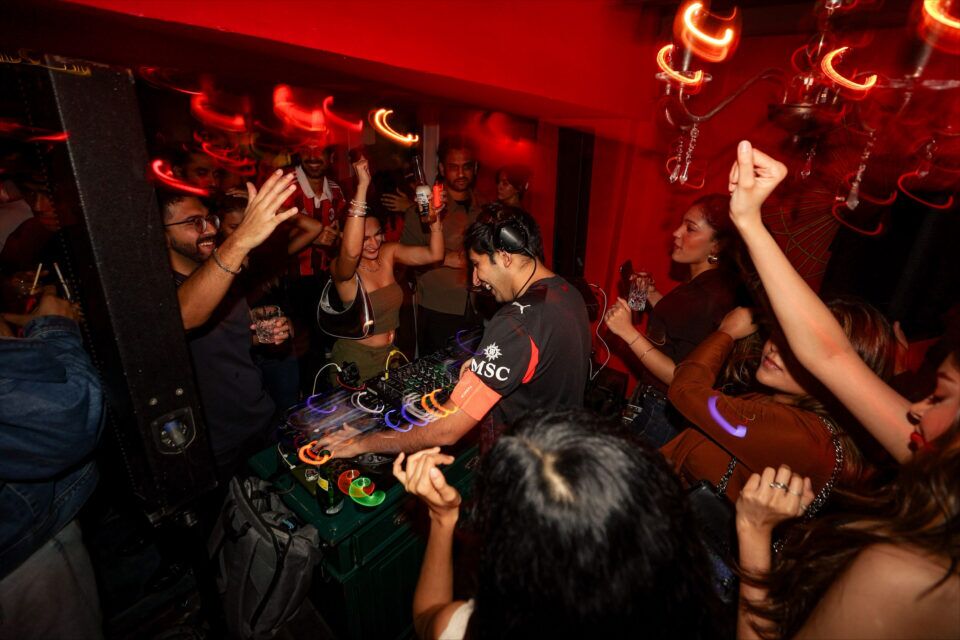
Recent programming at Slink & Bardot has ranged from Mumbai jazz duo ModCult to Bardot Nights Offline, an occasional edition that encourages a phone-free clubbing experience. On other nights, the sets stretch into melodic and Afro house, the kind of programming that builds patiently rather than detonating early, so that the energy in the room climbs in step with the hour.
Of course, given that the console is placed among the crowd rather than kept at a distance, it comes with its own hazards: “Drinks get spilled, equipment occasionally gets bumped, the music might stop for a few seconds,” Singh says. He’s quick to add, “I actually love that. It feels real. It all contributes to the feeling that you’ve walked into an impromptu house party rather than a traditional nightclub.”
Even the dancefloor is engineered for that same sense of momentum: “We deliberately keep the dancefloor compact early in the evening, gradually expanding it by removing tables as the night progresses. That way there’s always a critical mass of people dancing, and anyone walking in immediately feels the energy.”
Though Singh’s personal taste leans toward underground electronic music and more niche styles, he maintains that the music at Slink & Bardot has to be accessible.
“Guests coming for dinner are far more likely to stay if they recognize the energy of what’s being played rather than feeling excluded by it,” Singh points out. “We want people to enjoy themselves without needing to understand genres or labels.”
Ultimately, Singh feels that “Slink succeeds because we never ask guests to choose between food, cocktails or music.” He explains, “We’re still a restaurant first. We put as much effort into our food and drinks programme as we do into the music.”
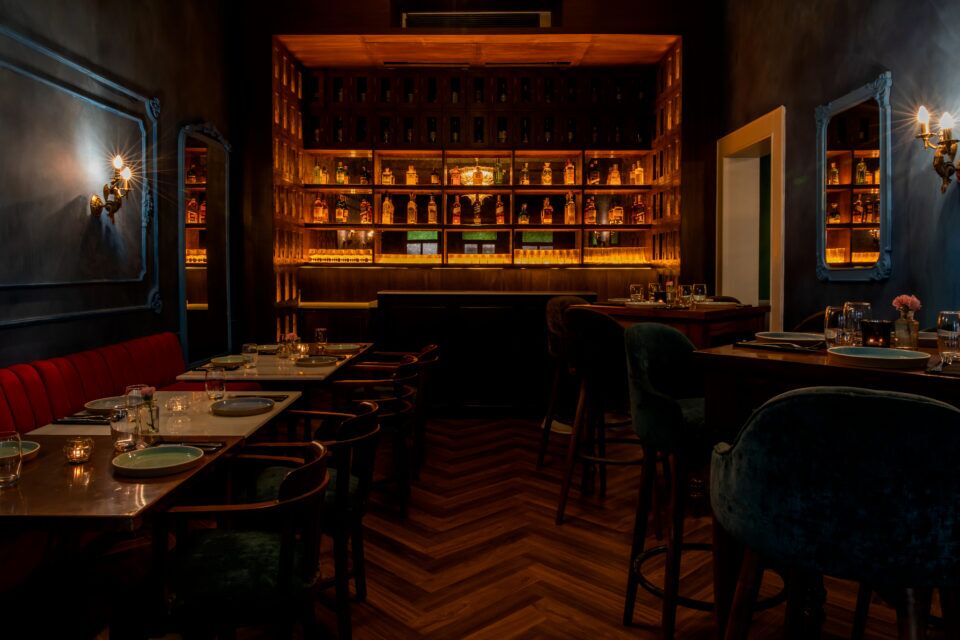
That same instinct for reading the room shaped Koliwada Cocktail Club, the more intimate space built within the same address. Where Slink & Bardot is engineered for volume and momentum, KCC runs Sunday through Thursday, away from the main room’s busiest nights. “It has its own independent sound system with a much slower musical tempo, while the room closest to KCC has no music at all,” Singh explains. “That prevents sound bleed and allows guests to immerse themselves in the storytelling behind the cocktails.” Sequencing, as much as soundproofing, is what makes the format work. “Trying to create that same experience on Friday or Saturday would have been far more difficult, because guests naturally come looking for high-energy entertainment on weekends,” Singh adds.
Across both rooms, Singh describes an “extremely hands-on” curatorial process that’s closer to bartending than anything based on market research or consumer data. “Rather than relying only on numbers, we’re constantly reading the room, watching how people respond to the music, how long they stay on the dancefloor, and how the overall energy shifts throughout the night,” he says. At the same time, he clarifies that it’s important not to treat “guests like guinea pigs by becoming too experimental” either. “Staying close to what’s happening in the room is what allows us to make those [curatorial] decisions,” he adds.
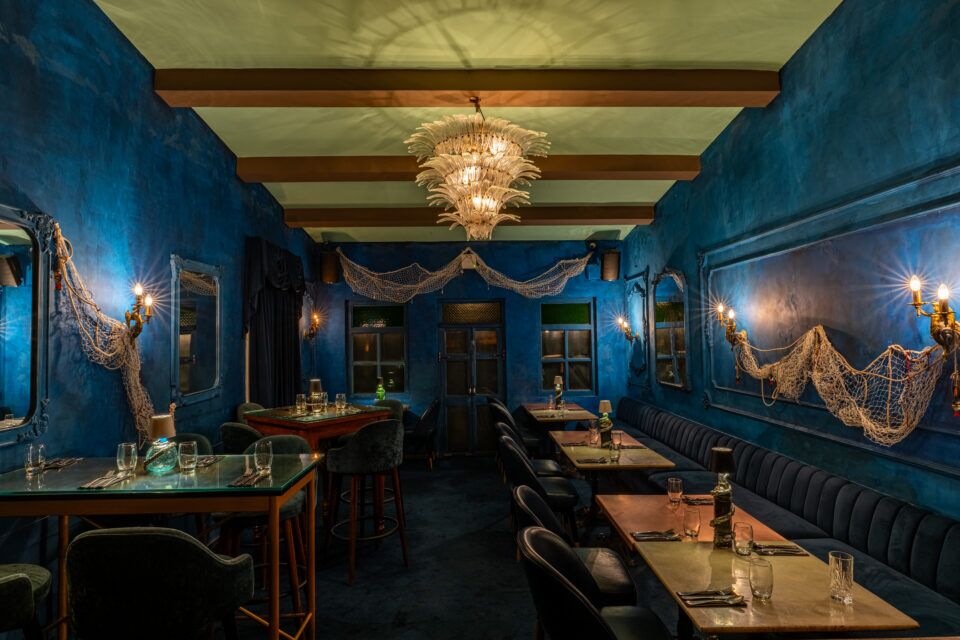
A seasoned mainstay in the Indian nightlife space, Singh has previously explored how a dining experience can “gradually transform” into a nightlife venue with spaces like Rain and Aurus. His read on the wider industry is that standalone nightclubs are an increasingly difficult business to sustain. “Your revenues are concentrated over just two or three nights a week, while rents, licences and operating costs remain constant every day,” he says. Guests, in his view, have also stopped wanting to stitch an evening together across separate venues: “People also don’t necessarily want three different venues anymore — a restaurant, followed by a bar, followed by a nightclub. Increasingly, they’re looking for one place where the evening naturally unfolds.”
Singh’s other ventures tell a similar story of an entrepreneur seeing hospitality as a business but with a strong conceptual lens. Long before Slink & Bardot, he opened Sanchos, one of Mumbai’s first upscale Mexican restaurants, and he returned to that cuisine more recently with Mezcalita, a cantina and tequila bar he launched with Rizwan Amlani, bringing a louder, more festive take on Mexican food and drink to the city. With Banng, he’s carried that same experience-focused sensibility into Thai cooking across its Mumbai and Gurugram outposts. It’s arguably proof that his format isn’t tied to one cuisine or one address.
Through it all, Singh is convinced that Indian hospitality has to look at flexibility. “Venues should create space to experiment and support different subcultures without losing sight of what their core audience comes looking for,” he says. “Creativity and commercial viability don’t have to be at odds — you just need to know when and where each belongs.”