Looking back at the classic high society K-drama that also served as a launchpad for future Hallyu superstars.

Poster for ‘The Heirs.’ Photo: SBS TV, courtesy of Viki.
The Heirs (also known as The Inheritors) was released in 2013 as a teen romance drama set in the middle of high society. The plot itself isn’t anything groundbreaking, to be honest. It follows the classic “rich boy, poor girl” Cinderella trope, complete with all the usual clichés: toxic wrist grabs, endless crying, the heroine inevitably falling in love with the same brat who bullied her, and then (the inevitable) dramatic separations. But despite its super-predictable nature, The Heirs remains a milestone in K-drama history. And that’s because it captures a specific societal anxiety—the invisible, rigid class barriers that young people were starting to feel acutely in modern Korea. The show took those real-world social fears and filtered them through a glossy high school setting, with a young cast of actors who would go on to become the biggest superstars in Korean entertainment.
The series opens outside of Korea, planting the characters under the bright California sun. In Malibu, Kim Tan’s (Lee Min-ho) luxury glass mansion is actually a gilded prison of exile. Meanwhile, Cha Eun-sang (Park Shin-hye) arrives with nothing but a suitcase in search of her sister, only to crash instantly into the harsh reality of an alien land. Left with nowhere to go, she finds herself at the mercy of Tan, who steps in to help her. Now, because they are far away from home, their initial friction quickly gives way to a temporary fairy tale where a wealthy boy can casually protect a stranded girl. Even so, it subtly lays down the stakes. When Tan looks at Eun-sang from his terrace, or when she’s forced to rely on his charity just for a place to stay, the narrative is already whispering a warning: their budding relationship is fundamentally built on an imbalance of power and is a ticking clock counting down to the moment they have to face the real world.
And hence, the moment they return to South Korea, the story drops the glamorous facade and gets down to business. The drama shifts to Jeguk High School, an elite institution that serves as a metaphor for modern capitalist society. Here, students aren’t ranked by their grades or achievements; they are divided into rigid social castes based entirely on their parents’ net worth and corporate status. You have the actual heirs of conglomerates at the top, followed by the children of stock-rich families, and finally, the charity cases at the absolute bottom, who are targeted and bullied by their peers.
This high school backdrop is exactly what flips the show from just another teen drama into a real story about class struggle and systemic pressure. The romance between Kim Tan and Cha Eun-sang keeps growing more difficult, not only because of disapproving parents, but also because their entire environment is designed to keep them apart. Eun-sang’s mother is a housekeeper working in Tan’s home, meaning their domestic reality is defined by a master-servant dynamic that constantly clashes with what the teenagers feel for each other. It’s felt in the very layout of the house, where Eun-sang lives in a maid’s room off the kitchen, hiding her presence from the family. The painful, silent tension of this situation peaks when Tan returns home to find Eun-sang washing dishes in his own kitchen, forcing them both to face the sad reality that while they share the same school by day, they stay in completely separate worlds under the same roof.
It’s easy for a story like this to become overly dramatic, but the young cast makes you care about their pain. Looking back, that’s the best part of The Heirs. It’s like looking at an old high school yearbook filled with people who went on to change the industry. At the time, Lee Min-ho and Park Shin-hye were already established actors, but for almost everyone else sharing their classroom, this drama helped their careers take off.
Kim Woo-bin’s Choi Young-do is essentially the reason behind the show’s biggest conflicts. He’s initially the bad guy, the high school bully, targeting Eun-sang as a tactical move to provoke Tan. However, the narrative gives him specific layers that explain his hostility. He’s got emotional scars, with a physically abusive father and a mother who ran away when he was only a child. His bitter rivalry with Tan is also personal, rooted in the collapse of what used to be a close childhood friendship. As the story develops, his motivation shifts when he develops feelings for Eun-sang, whom he initially set out to harass.
The supporting characters fill out the rest of the high school environment. Kim Ji-won plays Rachel Yoo, Tan’s icy and very blunt fiancée. There’s Kang Ha-neul as Hyo-shin, a stressed senior suffocating under his family’s rigid career expectations, and Park Hyung-sik as Myung-soo, serving as the perfect comic relief. Meanwhile, Krystal Jung and Kang Min-hyuk play a secondary couple whose relatively uncomplicated relationship keeps the show from getting too dark.
The series operates under the heavy thematic tagline, “He who wears the crown bears its weight.” The show’s title is actually pretty ironic, because over time, you realize that none of these teenagers really want what they are inheriting.
The drama reveals the brutal, often toxic pressures the children of the elite in South Korea are faced with, where parents often view them as business assets or extensions of corporate brands and tools for strategic mergers. Throughout the classroom, this objectification takes different forms: Tan is an illegitimate son whose mere existence is a secret and a threat to his older brother; Young-do is the incarnation of the violence and emotional cruelty of his father; Rachel is confronted with the harsh reality of her mother entering into a marriage that reduces family to business transactions; and Hyo-shin is breaking down under the relentless pressure to succeed, pushing him to the point of despair.
So, the real conflict in this story is beyond Tan and Eun-sang’s relationship. It’s more about a bunch of flawed, stressed-out teens who realize that their money is just a fancy trap. Their coming-of-age journey is defined by rebellion. When Tan finally stands up and admits his illegitimate status openly, he triggers a scandal, but by choice, thereby stripping away his own armor and refusing to live as a corporate puppet any further.
This rebellion is what makes the show’s closing sequence so bittersweet. Tan lets us into his daydream—a moment set a decade later, where his broken family, Young-do, and everyone else are finally happy and hanging out at a house party. But the show is too grounded in its own reality to leave us in that fairytale. When Eun-sang reminds him that everyone only gets along in his head, Tan just looks at her and says, “That’s why it’s a wish.”
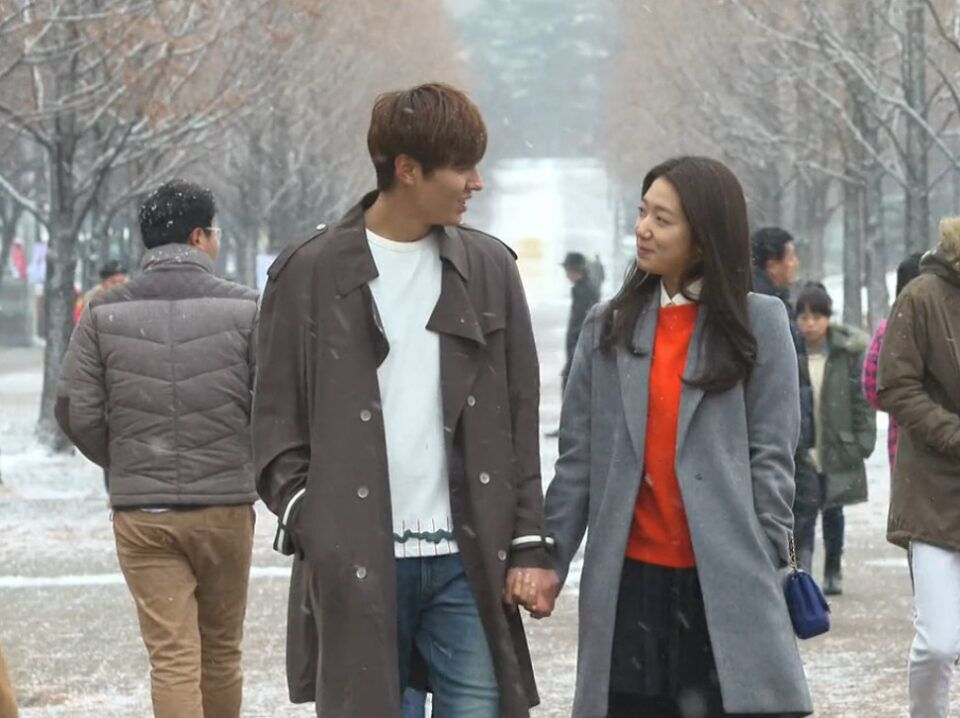
For me, The Heirs boils down to a simple truth: growing up means being able to claim your own life. We see this play out in the final scene as Tan and Eun-sang amble down the road, teasing each other about marriage while reflecting on everything they’ve survived. And as they resolve to keep moving forward despite whatever hardships wait for them, that walk becomes a statement against a judgmental world where they choose to wear a crown of their own making — one forged from their own choices, love, and resilience, rather than any inheritance.