


Synopsis
The Netherlands is globally renowned for its vibrant tulip fields and iconic windmills, drawing millions of tourists annually. These symbols represent centuries of Dutch history, innovation in water management, and cultural identity, making them integral to the country’s international image and tourism.
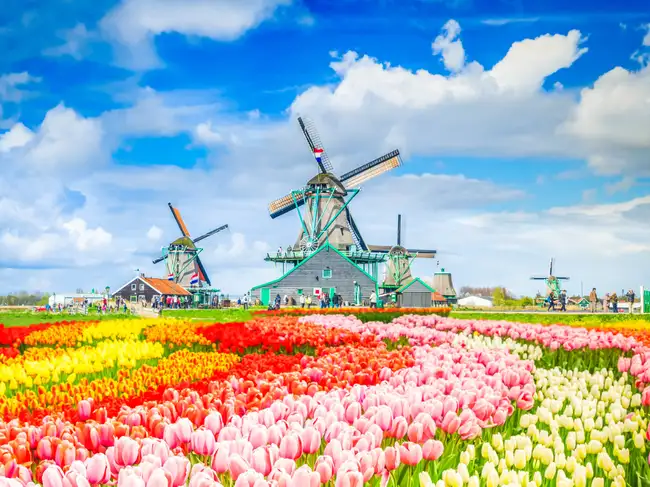
If you have ever wondered which country is famous for tulip fields and windmills, the answer is the Netherlands. Often referred to as Holland in casual conversation, the Netherlands has become globally recognised for its colourful tulip gardens, iconic windmills and postcard-perfect countryside landscapes.
Every year, millions of tourists visit the Netherlands to witness endless rows of blooming tulips and historic windmills that have become symbols of Dutch culture. The country’s stunning flower fields and traditional windmills are among the most photographed attractions in Europe.
The Netherlands’ reputation for tulip fields and windmills is so strong that these two images are often considered the country’s international identity.
Why the Netherlands Is Famous for Tulip Fields
The Netherlands is one of the largest flower-producing countries in the world and is especially famous for tulips. During spring, huge tulip fields burst into bright shades of red, yellow, pink, purple and orange, creating spectacular landscapes across the Dutch countryside.
Read more: Which country is known as the Land of Smiles?
One of the most famous places to see tulip fields in the Netherlands is Keukenhof, often called the “Garden of Europe”. Located near the town of Lisse, Keukenhof attracts visitors from around the globe during the tulip season, which usually runs from March to May.
Although tulips originally came from Central Asia and later became popular in the Ottoman Empire, the Netherlands transformed them into a major cultural and economic symbol during the 17th century. Today, Dutch tulip exports contribute significantly to the country’s flower industry.
The Story Behind Dutch Windmills
Apart from tulip fields, the Netherlands is equally famous for its traditional windmills. These historic structures were not built only for decoration, they once played a vital role in Dutch life.
Because large parts of the Netherlands lie below sea level, windmills were historically used to pump water out of low-lying land and prevent flooding. They also helped grind grain, saw wood and support agricultural production.
One of the most famous windmill locations in the Netherlands is Kinderdijk, a UNESCO World Heritage Site featuring 19 historic windmills. Another popular destination is Zaanse Schans, where visitors can explore preserved windmills, traditional Dutch houses and local crafts.
Today, windmills remain one of the most recognisable symbols of Dutch heritage and tourism.
Best Time to Visit the Netherlands for Tulip Fields and Windmills
Travellers hoping to experience the famous tulip fields and windmills of the Netherlands usually plan their trips during spring. The best time to see tulips in full bloom is generally between mid-April and early May.
Spring also offers pleasant weather, making it easier for tourists to explore countryside cycling routes, flower gardens and historic villages. Many visitors combine tulip tours with trips to Amsterdam and nearby windmill attractions.
The Netherlands’ tourism industry sees a major boost every year thanks to global interest in its tulip fields and windmills.
Why Tulip Fields and Windmills Define Dutch Culture
Tulip fields and windmills are more than just tourist attractions in the Netherlands. They represent centuries of Dutch history, engineering, trade and cultural identity.
The tulip became a symbol of wealth and beauty during the Dutch Golden Age, while windmills demonstrated the country’s innovative approach to water management and land reclamation.
Even today, images of colourful tulip fields and traditional windmills continue to define how people around the world picture the Netherlands.
For anyone asking which country is known for tulip fields and windmills, the Netherlands remains the clear and undisputed answer.