
Observing that the Mathura-Vrindavan crowd management is not based on science, the Allahabad high court has issued a series of recommendations to the Uttar Pradesh government to reform the system of crowd management there.
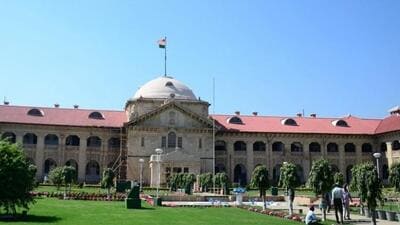
Taking note of stampede-like incidents in the past, Justice Vinod Diwakar sought detailed affidavits from the vice-chairman of the Mathura-Vrindavan Development Authority (MVDA), the district magistrate, the municipal commissioner and the senior superintendent of police.
The bench observed that crowd management in Mathura has largely been reduced to traffic management, reflecting
a fundamental misunderstanding of crowd dynamics. It noted that religious gatherings differ significantly from political rallies or sporting events, as devotees often become less aware of danger due to emotional involvement.
Referring to studies on crowd science, the court said individual control begins to collapse at a density
of four to five persons per square metre, while densities of six to seven persons per square metre can lead to compressive asphyxia, a condition frequently seen at major pilgrimage centres in India.
The court passed these directives while hearing a case related to an alleged illegal construction in Vrindavan.
The court expanded the scope of the proceedings to address serious deficiencies in crowd management in Mathura-Vrindavan.
“Stampedes and crowd-related incidents at religious gatherings are not merely the result of administrative
lapses or inadequate infrastructure but stem from a failure to understand the science of crowd behaviour,” the court added.
The petition was originally filed by Swami Shiv Swaroopanand Maharaj challenging a demolition order
concerning the construction of an ashram on his land in Vrindavan. During the hearing, the petitioner alleged selective action against only a few of the 23 illegal constructions, describing it as a pick-and-choose approach.
According to the MVDA’s affidavit, 2,453 notices were issued against illegal constructions between 2021-22
and 2025-26. While demolition orders were passed in 700 cases, only 323 were executed. A total of 104 properties were sealed, and 212 cases were compounded. The court described these figures as only “the tip of the iceberg,” indicating that the actual problem was far more serious.
The court also criticised the short-term planning approach for the ancient city of Mathura, saying cities with immense cultural and religious significance such as Mathura, Ayodhya, Varanasi and Chitrakoot require long-term urban planning and cannot be treated like ordinary cities.
Observing that illegal constructions in pilgrimage towns are often driven by organised networks involving
land mafia, builders and political patronage, the court said the issue requires strong institutional will rather than merely stricter laws.
Recommendations
The high court recommended that crowd behaviour science be introduced as a formal subject in university courses related to urban planning, disaster management, civil engineering and psychology. It also suggested establishing a Centre of Excellence on crowd science and urban risk management in collaboration with institutions such as IIT Kanpur or IIT Roorkee, creating a statutory urban design commission for Uttar Pradesh on the lines of the Delhi Urban Art Commission, mandating certified crowd safety experts for major public events, and incorporating crowd science into master planning and building regulations for pilgrimage towns.
Granting relief to the petitioner, the court, in its order dated July 22, permitted him to make a fresh representation before the competent authority, which will reconsider the matter in light of the Supreme Court’s November 13, 2024 directions and subsequent government circulars. Till then, the Agra divisional commissioner’s order dated September 4, 2025, shall remain stayed.
(With agency inputs)