Beijing tells China companies to ignore US sanctions on refiners
Bloomberg
Synopsis
China’s commerce ministry said the sanctions unlawfully restrict normal trade with third countries and violate international norms. In a rare move, it issued an order prohibiting recognition, enforcement or compliance with the penalties targeting the five firms.
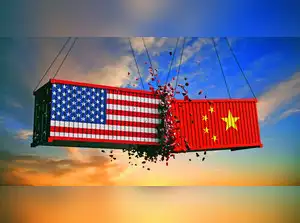
BEIJING: China has ordered domestic companies not to comply with U.S. sanctions on five refiners linked to Iran’s oil trade, invoking a 2021 “blocking” law aimed at shielding firms from what it calls unjustified foreign measures.
The refiners – including Hengli Petrochemical’s Dalian unit, sanctioned last month – had faced asset freezes and transaction bans under U.S. measures.
China’s commerce ministry said the sanctions unlawfully restrict normal trade with third countries and violate international norms. In a rare move, it issued an order prohibiting recognition, enforcement or compliance with the penalties targeting the five firms.
Beijing has consistently opposed unilateral sanctions lacking United Nations backing and a basis in international law, the ministry said.
Also Read: UK military says a bulk carrier near Strait of Hormuz reports being attacked
The standoff comes weeks ahead of an expected meeting between Donald Trump and Xi Jinping. While the move is unlikely to derail the summit, Washington’s response will indicate whether tensions escalate, analysts at Eurasia Group said.
The affected refiners largely work with Chinese banks that have not yet been directly sanctioned, analysts led by Dominic Chiu said. Any expansion of U.S. secondary sanctions to financial institutions or major state-owned firms could trigger stronger countermeasures from Beijing.
Also Read: Iran juggles oil cuts and storage strain to resist US blockade
China remains the largest buyer of Iranian crude, much of it routed indirectly through private refiners and processed into fuel products. Official customs data do not reflect these flows.
Earlier U.S. efforts had targeted smaller Chinese operators, but Hengli represents a newer class of large, sophisticated private refiners. The private sector accounts for roughly a third of China’s refining capacity, underscoring the country’s focus on energy security.