
The Uttar Pradesh government is all set to impose a ceiling on the amount legislators can spend from their Vidhayak Nidhi (MLA/MLC local area development fund) on the installation of solar lights and construction of entrance gates in their constituencies, a move that could significantly change the pattern of spending under the lawmakers’ local area development scheme.
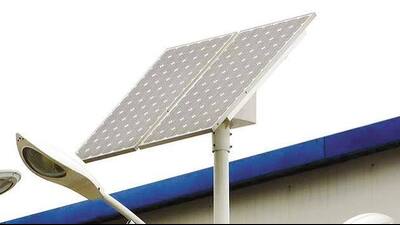
According to highly-placed sources, the move follows chief minister Yogi Adityanath’s concern over disproportionate use of money under the Vidhayak Nidhi on these two categories of works. The CM, according to them, had verbally directed officials to examine the feasibility of fixing a maximum percentage of the annual allocation that can be spent on solar lights and entry gates.
“Following the chief minister’s directives, the principal secretary, rural development, asked the commissioner, rural development, to examine the issue and submit recommendations,” a senior official said adding, “the commissioner’s office has since recommended capping expenditure under the two heads, paving the way for the government to take a final call.”
Officials familiar with the proposal said a review of spending pattern showed that many legislators were utilising a substantial or the highest share of their annual Vidhayak Nidhi for recommending solar lights and entrance gates to villages, colonies in cities etc.
According to official data available with the office of the commissioner, rural development, during 2024-25, MLAs recommended a total 32,224 works/projects of different natures, and 19,645 projects were sanctioned. The streetlights/solar lights accounted for over 43% of the recommended works and more than 71% of the sanctioned works.
The high mast lights (powerful flood lights that illuminate large areas with high-mounted heights) emerged on the top of the list of projects accounting for 30% of the total work projects recommended by legislators for their constituencies.
As a result, a relatively smaller portion of the funds remains available for other development works. In UP, each MLA gets ₹5 crore as Vidhayak Nidhi every year. Sources said the government also received complaints that these works were, in some cases, being disproportionately favoured for reasons other than development priorities. It prompted the government to examine if the expenditure under the two heads needed to be regulated.
The proposal assumes significance as it comes at a time when an 11-member committee of the UP Assembly is consulting legislators on possible changes in the implementation of the Vidhayak Nidhi scheme.
During the consultations, MLAs demanded flexibility in utilising funds in the annual allocation, including an increase in the ceiling on expenditure for providing medical assistance to patients with critical illnesses.
MLAs demanded flexibility in the utilisation of funds in the annual allocation, including an increase in the ceiling on the expenditure for providing medical assistance to patients with critical illnesses.
The proposed cap, it is said, may disappoint many lawmakers who have routinely allocated a sizable portion of their constituency funds to these two categories of works.
Government officials, however, maintained that the objective of the proposal was to ensure a more balanced and equitable utilisation of public funds so that a wide range of development needs across constituencies could be addressed.