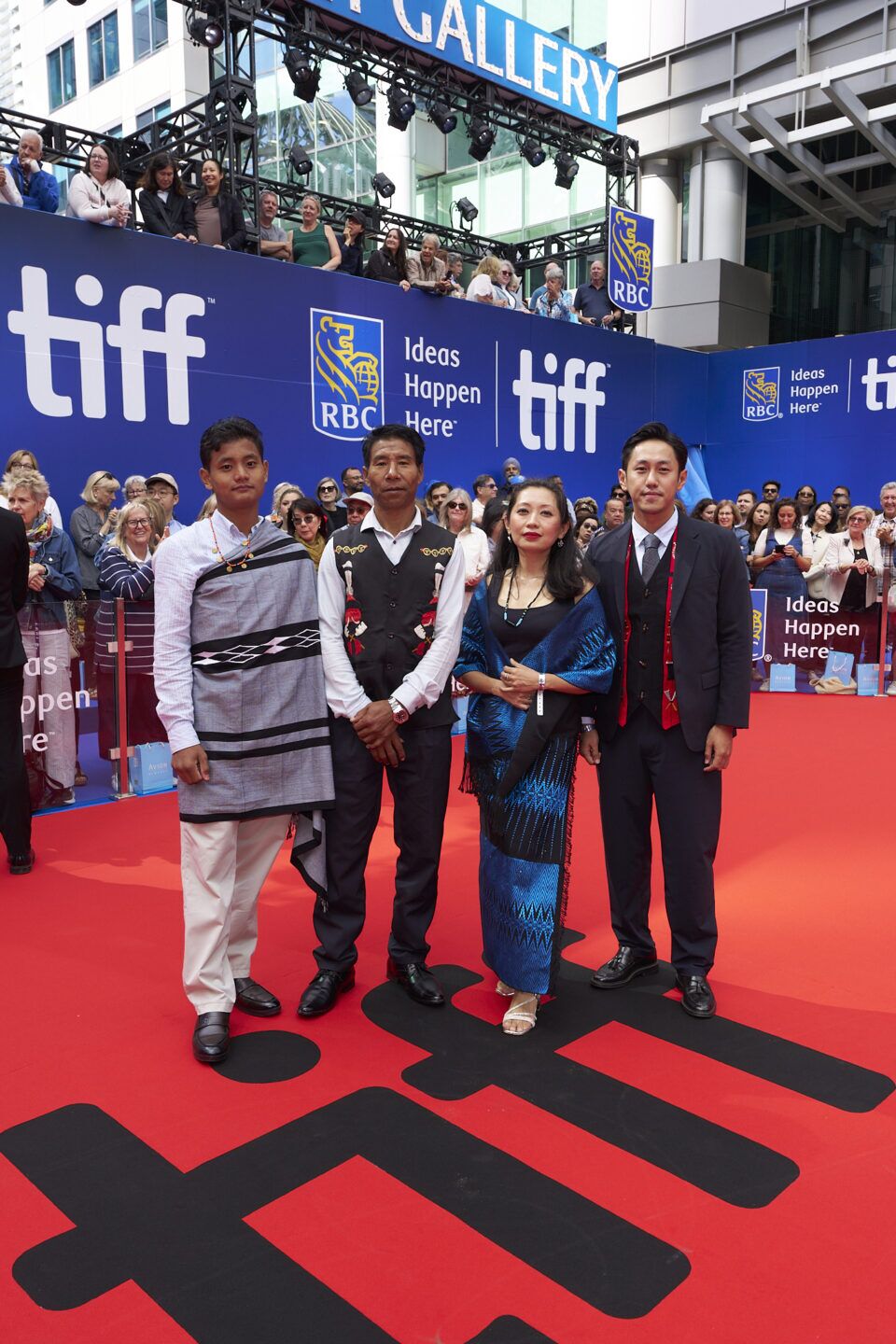
Theja Rio’s debut feature is deeply rooted in Nagaland, but its journey has already taken it to TIFF, international buyers and a much bigger conversation about who gets to tell stories from the Northeast.
The first thing Theja Rio tells me about Angh is that the short film it grew out of is almost impossible to find. “We’ve intended to seal and close it in a vault,” he laughs.
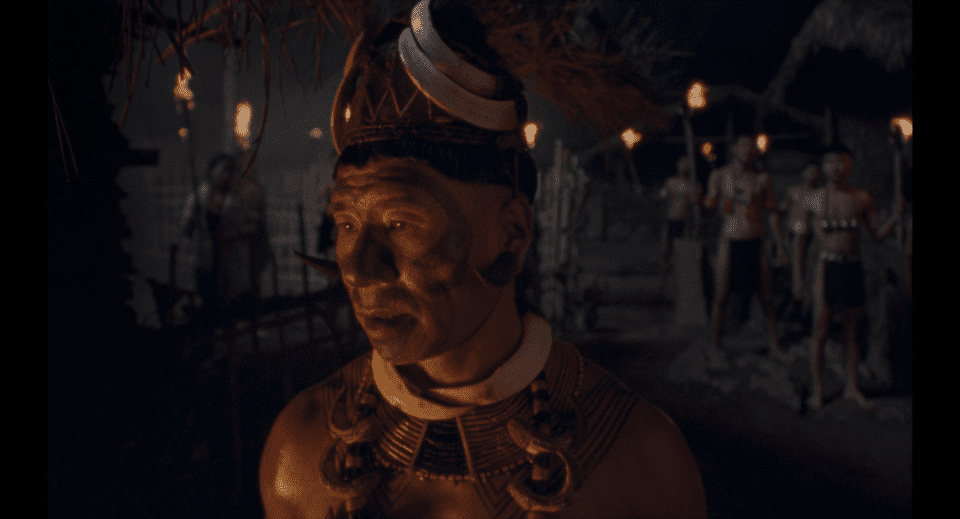
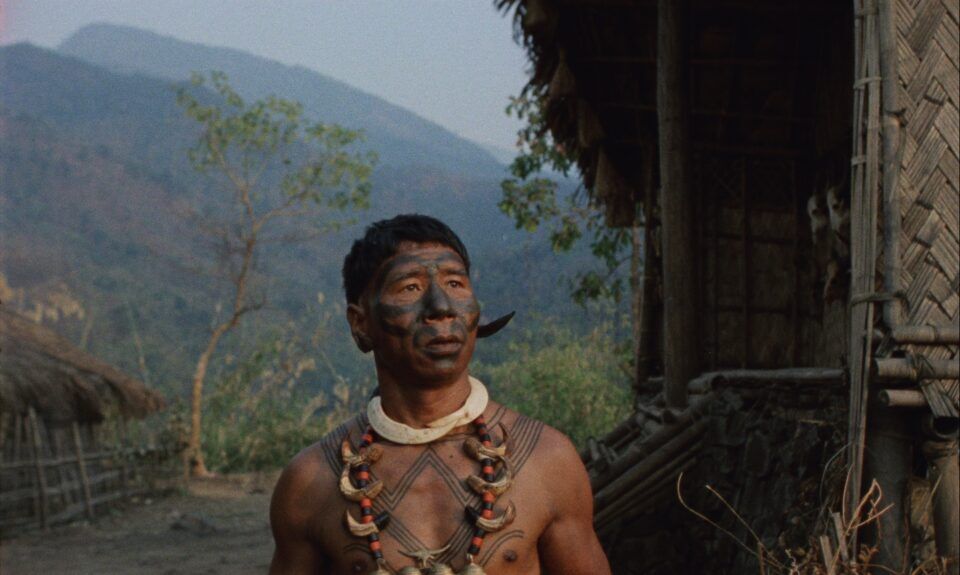
While the short was written in 2018 and shot in 2019, Rio only began expanding it into a feature around 2021. The basic idea remained the same: a father and son are among the last people in their region to convert to Christianity, at a time when Nagaland is going through an enormous cultural shift through the 1960s. They belong to the Konyak community, concentrated largely around the Mon district. Traditionally, Konyak villages were organized around an Angh, or chief, which gives Rio’s film its anchoring title. Historically, the community followed Indigenous belief systems before Christianity became dominant across the region.
That context matters because Angh is set at the point where one world is giving way to another. Rio describes Nagaland as a place where religion, governance, and everyday life changed extraordinarily quickly over a handful of generations, but the film looks at that transition through one family rather than trying to give us a textbook on Konyak history. “It gave me the time and space to delve much deeper into the father and son relationship,” he says of expanding the short, while also allowing him to spend more time with the Konyak world around them.
Rio’s 103-minute feature directorial debut has already made a splash on the festival circuit, winning the Platform Prize at TIFF 2026 and securing a direct route into Academy Awards consideration. But the director is quick to point out that he never wanted Angh to become the sort of film that exists mainly to explain a community to outsiders. “Fundamentally, the film is a father and son film rather than a didactic film that is trying to teach the world about the Konyaks,” he says. Rio also isn’t especially interested in turning the transition into a neat good-versus-bad argument. At TIFF, Rio spoke about trying to maintain a certain neutrality because the history itself is far more complicated. Christianity, he points out, brought “so much peace” to the region and remains central to life for many people, providing hope and faith, while at the same time existing alongside the question of what was diminished as older systems disappeared. “I normally try and write things that I’m more conflicted about rather than things that I’m sure about,” he says.
That instinct feeds into one of the more interesting things Rio says about his own development as a filmmaker. When he first started writing, even he was unconsciously approaching stories from Nagaland “from the eyes of the explorer rather than the subject”. “That’s strange when you are the subject yourself, right?” he says. For a long time, he adds, he subconsciously believed Naga stories, perspectives and even the region’s sense of humor were somehow not meant for the big screen. It took wider exposure to cinema from elsewhere for that assumption to fall apart. “True revolution in cinema,” he says, “would be to find not just your own stories, but the process and the technique and the procedure to how to tell your own stories.”
It’s a sentiment that feels especially relevant in Nagaland today. Rio describes a place where rituals and festivals coexist with a modern reality shaped by the internet, global media, and changing lifestyles, while younger generations also turn back to their roots with more confidence. He points to efforts to repatriate Naga remains held abroad and a renewed interest in traditional identity. “The making of this film is also an attempt to do that,” he says. “Us trying to reclaim our identity in the aftermath of all the changes that have happened.”

Making The Film Without Diluting It
Producer Nancy Nisa Beso has been by Rio’s side since the short, and says they both knew early on that the story would eventually become a feature. Her role became partly about creating enough space for Rio to make the film he actually wanted to make. Especially having worked with first-time directors before, Beso had seen how quickly a debut could get overwhelmed by too many opinions. “Sometimes we get too many inputs as to how to make a film, and then you lose the spine of the director,” she says.
At the same time, authenticity required bringing in the right people. Much of the history they were dealing with survives through oral traditions, so the production worked closely with Konyak community bodies and elders on language, cultural practice and traditional identity. Rio remembers moments where a dramatic choice had to be stripped back because it wasn’t accurate enough, sometimes over something as small as the wrong necklace or clothing for a ritual. The people advising them also understood that Angh was fiction rather than documentary, which gave the film some room to tell its story without pretending to be an ethnographic record.
Some of the best details came through less formal routes. Between the short and feature, Rio spent several months in Mon while working on an unrelated documentary. During one conversation, an elder casually told his grandson a fable. Rio heard it, made a note of it, and eventually realized it perfectly embodied what he was trying to do with Angh. “Once you’ve spent enough time with something, then you start cherry-picking what you can use and what you can’t,” he says.

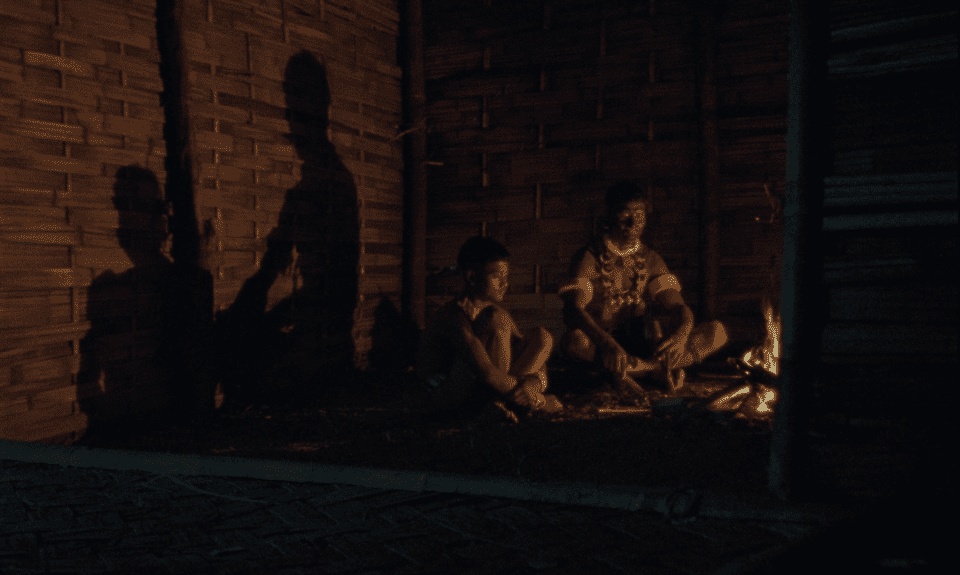
Then there was the actual business of making the thing, which sounds slightly insane. “We were like cowboys,” Beso laughs. The team identified land between Kohima and Dimapur and built two villages from scratch on a mountain, with members of the Konyak community involved in the construction, all while the approaching monsoon put an expiry date on the entire exercise. Families and well-wishers would arrive on set with cookies, eggs and cakes. “For them it was a picnic,” Beso says. “For us it was also like a picnic.”
A very stressful picnic, admittedly. Rio had decided early that he wanted to shoot on 16mm, partly because he was drawn to the texture of archival images and missionary-era footage of the region. There’s an interesting circularity to that choice: a visual language historically associated with outsiders looking at these communities being repurposed for a story told from within. Practically, though, it was a pain in the neck. Beso describes exposed film travelling from Nagaland to Bombay for processing, a 2K scan being used for the edit, and a final 4K scan later completed in Chennai before the festival run — a task that needed its own dedicated crew member to coordinate.
Casting was no easier. The search stretched for close to a year, with the casting director traveling from village to village and sometimes going door-to-door to convince people to audition. Sobino Rengma, who plays the son, was someone Rio already knew in Dimapur; after months of searching elsewhere, he simply ran into him one day and saw the character almost immediately.
Anglong Konyak was found in a much stranger way. Still struggling to find the right person to play the father, Rio typed “Konyak stand-up comedian” into YouTube. Anglong popped up. He had the presence and timing Rio was looking for, along with enough stillness for a character that needed both stoicism and vulnerability. Sometimes months of casting apparently end with a very specific Google search.
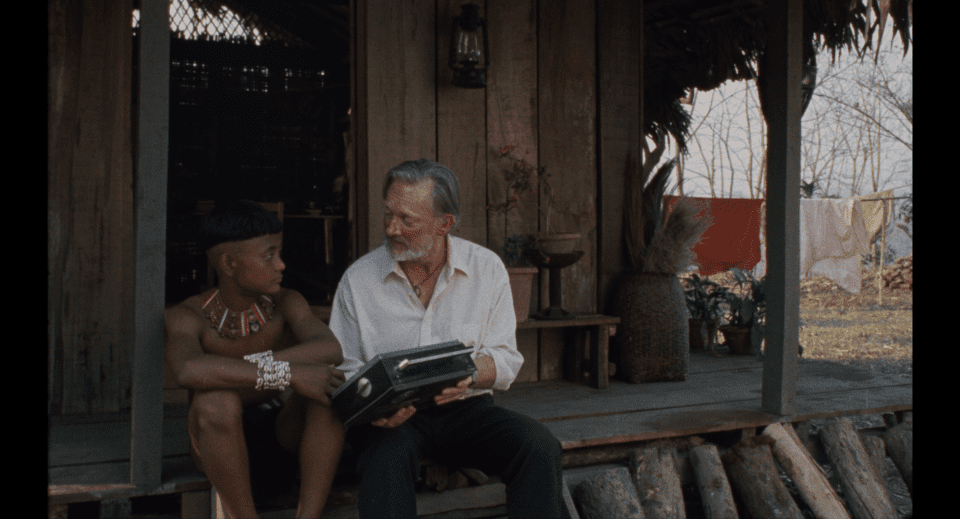
On the opposite end of the spectrum was veteran Scottish actor Douglas Henshall, who plays the American missionary entering this changing world. Henshall sees the character as more unsettling precisely because he doesn’t believe he is the villain. “He doesn’t think he’s doing anything bad. He thinks he’s helping,” the actor said at TIFF, describing his flaw as “the arrogance of ignorance”. The production had initially reached out to Willem Dafoe—whom Henshall shares an agent with—for the role, which Beso recounts with exactly the kind of ambition that seems to define the whole project. “We may make a small film, but what’s the worst people are gonna say? They’re gonna say no.”
The Hard Part Comes After You Make It
If Rio and Beso’s job was to make sure Angh retained its specificity, Gaurav Dhingra’s was to figure out how to make that specificity travel. Dhingra came aboard after shooting had already wrapped and first saw a loose assembly running around two and a half hours. He had initially been offered a producing role, but his reaction was essentially that the producing was already done. “They had already shot it,” he says. “I said, ‘Let me sell the film.’”
According to Dhingra — who has previously worked across distribution, production and financing on projects like Peddlers, Angry Indian Goddesses and Stolen — the problem facing independent films is refreshingly simple. “The main problem today is not making the film,” he says. “The main problem today is making the film reach its audience.”
His philosophy around Angh is similarly direct: “The more local you get, the more global you become.” For Dhingra, the Konyak language, costumes, rituals and setting are not obstacles to international audiences. They are part of the reason the film has something distinctive to offer. The universality comes from elsewhere: a son disagreeing with his father, an older generation watching a familiar world disappear, a family caught between tradition and change. “Tell me, which child doesn’t disagree with his father?” he asks.
That philosophy got its biggest validation so far at the Toronto International Film Festival, where Angh was selected for Platform, TIFF’s competition section, and went on to win the Platform Award. Beso says simply getting the selection email already felt like the win. Then came the actual festival, where around 30 or 40 members of Toronto’s Naga community turned up to a screening in traditional attire, many taking time off work to be there. Several of the film’s first-time actors were also watching themselves in a large cinema in front of more than 500 people. “For us,” she says, “that was the big win.”
For Dhingra, though, TIFF was also work. “Festivals are for sales,” he says bluntly. The team worked press, social media, distributors and industry screenings, all with the aim of turning attention into actual buyers. The glamorous bit, in his telling, lasts about one evening. “You go out, drink with everybody, have a good meal. Next morning, back to work.” His idea for the Indian release is similarly unconventional: treat the film like a touring band. “Imagine a rock band going across the country,” he says. “Instead of a rock band, there is a film.”